

There is a version of the South of France that exists in films and fashion editorials - glamorous, excessive, slightly unreal. And then there is the version you find when you actually go, which is stranger, more beautiful, and far more layered than any image has ever managed to capture.
I spent two weeks moving along the Côte d’Azur in June, from the quiet peninsula of Saint-Jean-Cap-Ferrat to the beach clubs of St. Tropez and Cannes, with three days in a Provence vineyard in between that recalibrated everything. What I found was a place operating at two completely different speeds simultaneously, and the discovery that you need both to understand it.
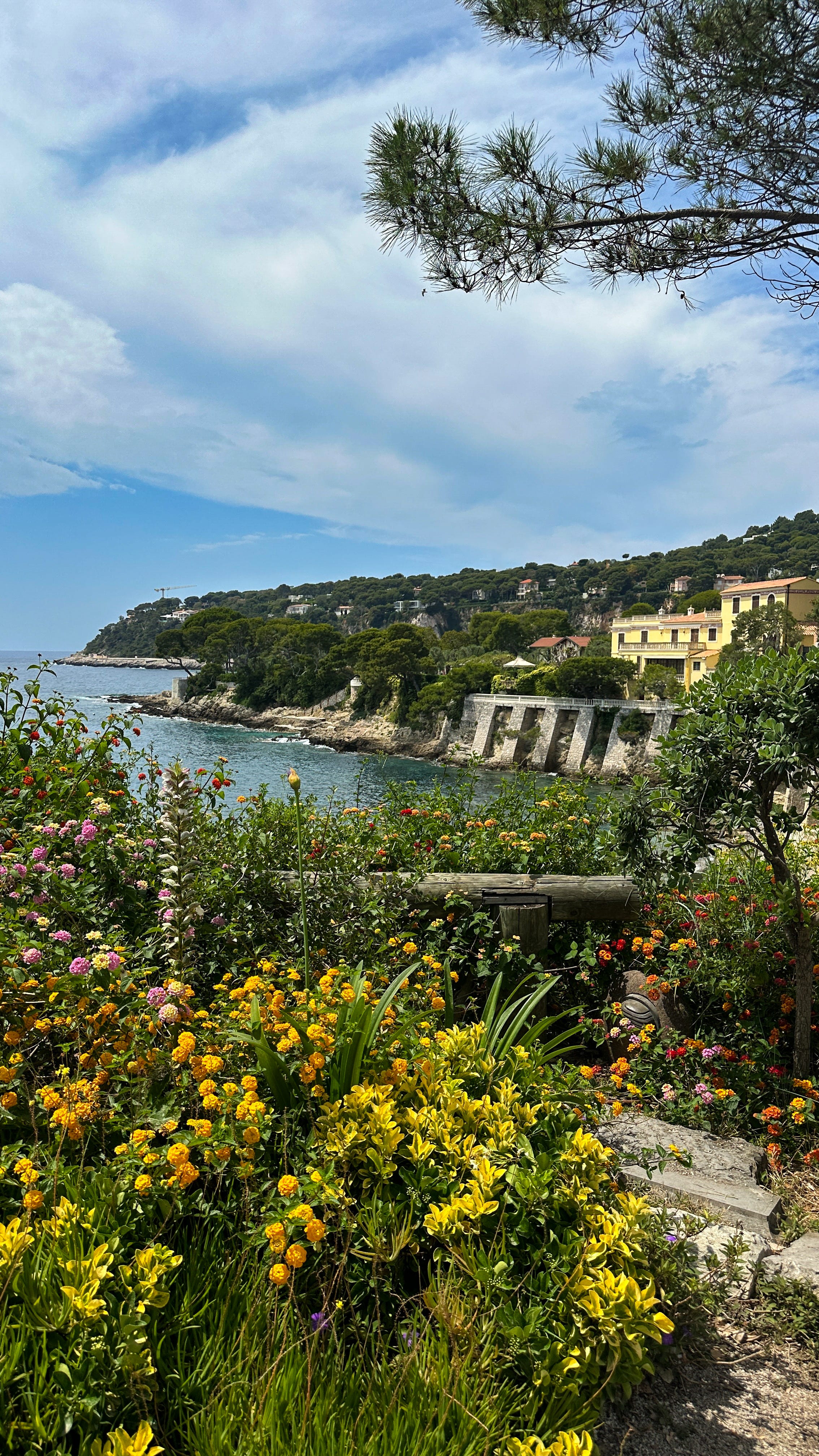
Saint-Jean-Cap-Ferrat | Barefoot Luxury
I expected Saint-Jean-Cap-Ferrat to announce itself. Ultra-wealthy, ultra-polished, the kind of place that knows exactly what it is and performs accordingly.
What I found instead was something quieter and more confident than that. Yes, the villas are extraordinary and the cars parked along the narrow streets cost more than most apartments. But the peninsula itself is surprisingly unhurried, surprisingly un-crowded, and entirely without the self-consciousness you find further along the coast. It is luxury that has nothing left to prove.
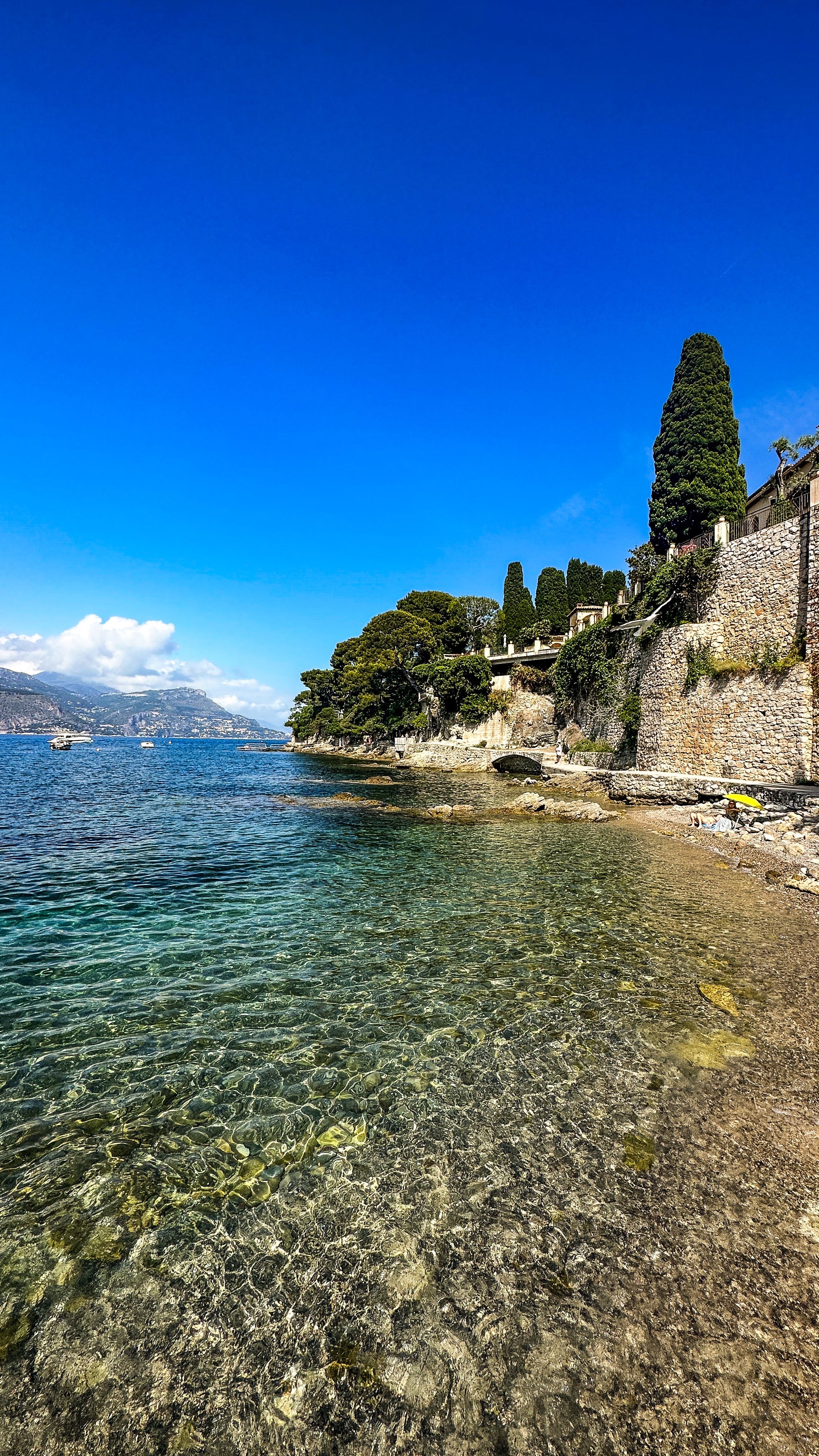
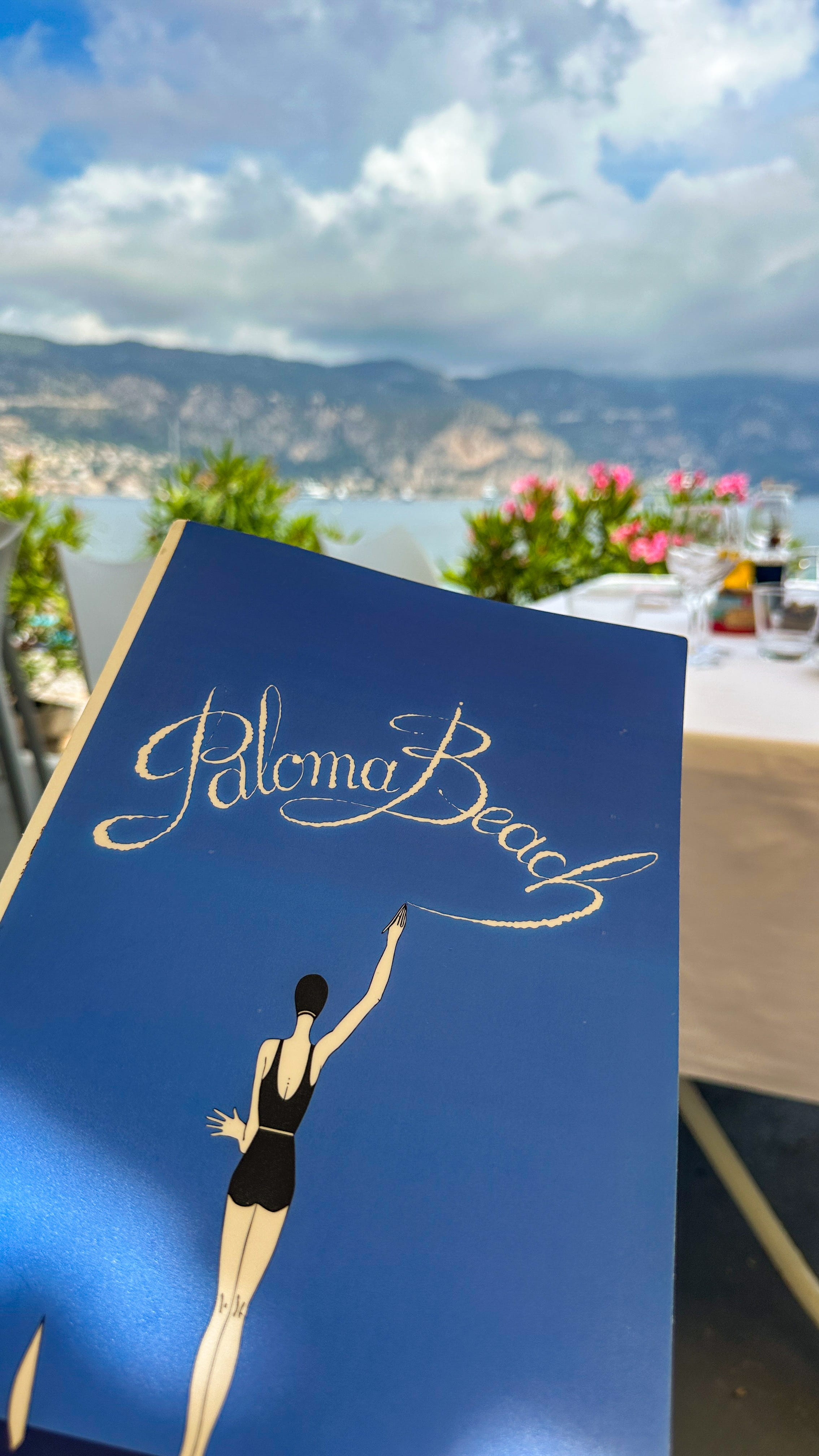
Paloma Beach Club sits tucked into a bay on the peninsula, accessible only on foot, no valet, no grand arrival. Tan loungers sit close to the sand rather than elevated on platforms designed to be photographed. The restaurant is elegant without being intimidating. The whole place operates on what I can only describe as barefoot luxury, the most refined version of completely relaxed. It is the kind of place where the absence of pretension feels like its own form of extravagance.
From Paloma we walked the path that circles the tip of the peninsula, one of the most quietly beautiful walks on the entire Riviera. The views across to Beaulieu-sur-Mer open up without warning, a sweep of coastline and Mediterranean blue that stops you completely and makes the effort of finding this place feel entirely worth it.
Eze Village | Magic in the Overcast Morning
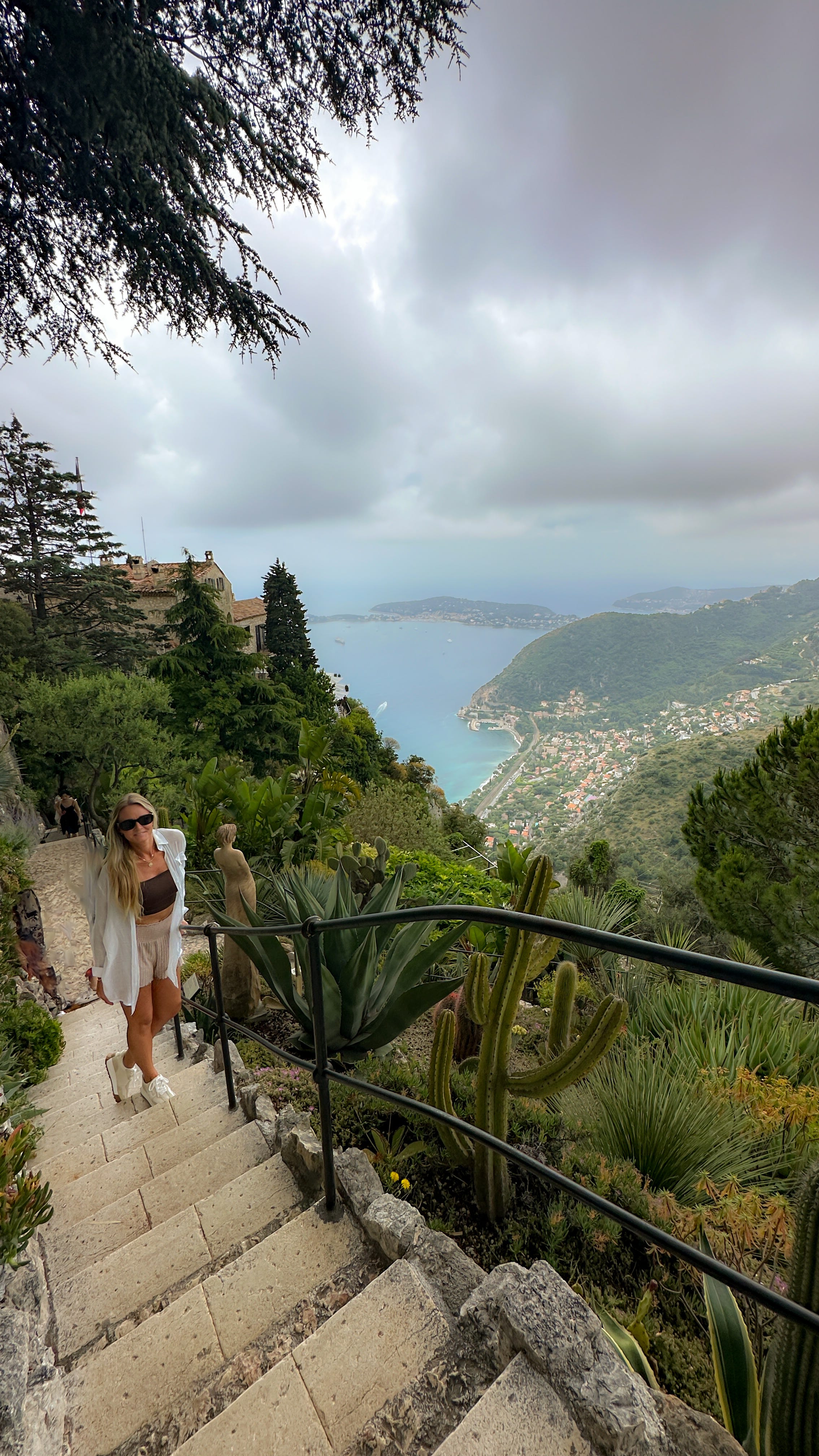
The correct time to visit Eze is early, before the tour buses arrive, on a day when the clouds are low over the valley.
We were almost alone in the Jardin Exotique that morning. The mist sat in the Nice valley below us and the light was soft and strange, the kind that makes colors more saturated rather than less. The winding medieval streets to the top are lined with wildflowers growing directly from the ancient brick walls — not planted, not tended, just stubbornly beautiful in the way that things are when nobody is trying. At the summit the entire arc of the Côte d’Azur stretches out below you and the clouds make it look painted rather than real.
If you see Eze on a clear summer afternoon in August surrounded by other tourists it is still worth visiting. If you see it the way we did — quiet, misty, almost private — it becomes something you will try to explain for years.
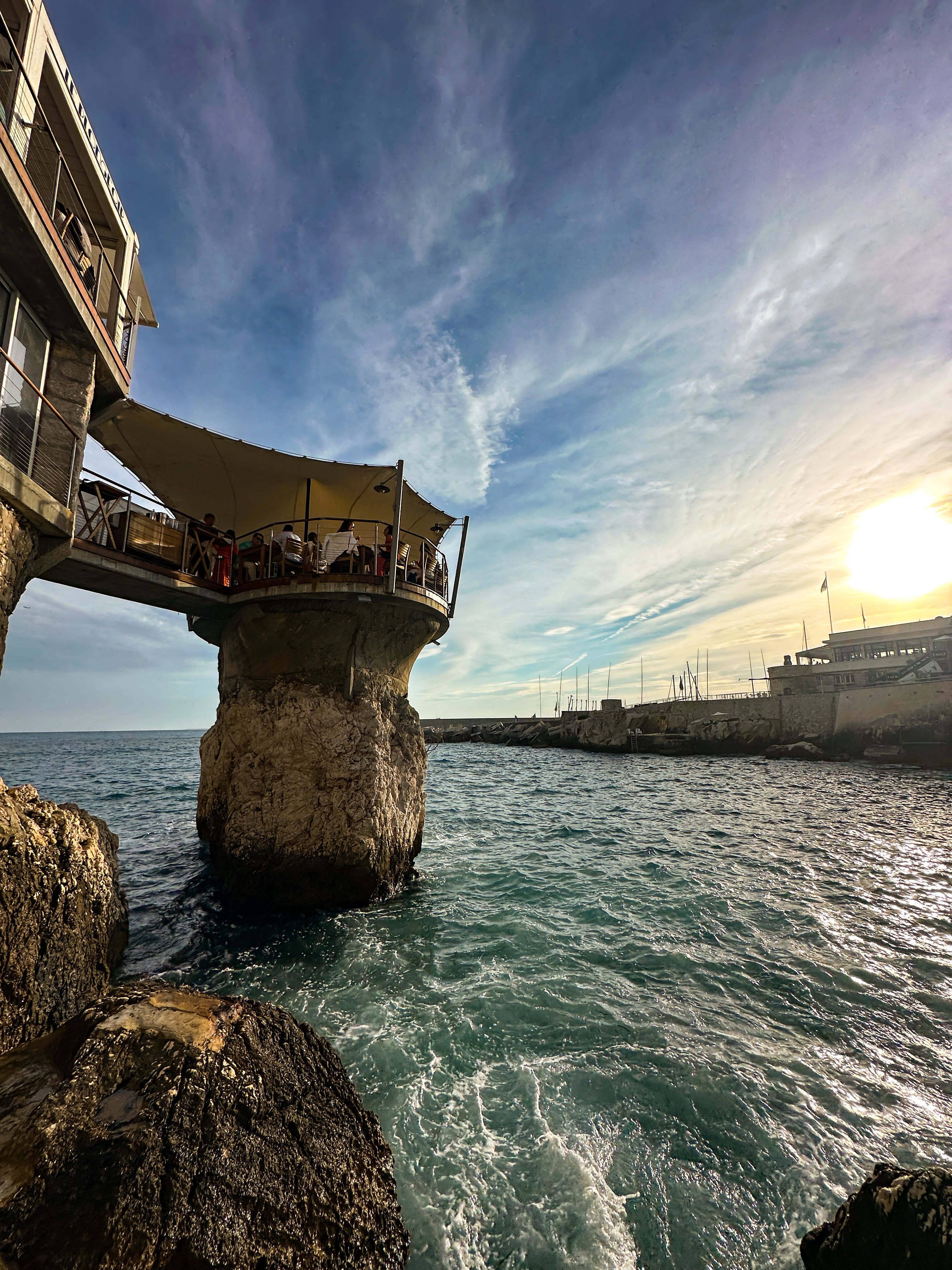
Le Plongeoir Nice | The Bar Built on a Rock
After Paloma the sun dropped behind the hill earlier than expected, so we made our way to Nice and arrived at Le Plongeoir just in time.
Without a reservation the only way in is through the bar and lounge, which is exactly where you want to be anyway. Le Plongeoir is built on a rock pillar jutting into the Mediterranean — originally a diving platform in the 1930s, now one of the most dramatically situated restaurants on the French Riviera. We sat on the patio with cocktails above the water and watched the boats come back into the harbor as the light went gold behind the city. It is not the kind of place you linger for hours. It is the kind of place you arrive at exactly the right moment and let it be exactly what it is.
St. Tropez | Where the Party Has a Schedule
Getting to St. Tropez by car is its own adventure - small winding mountain roads that descend suddenly to the coast, the kind of drive that makes you understand immediately why the seriously wealthy arrive by helicopter or by boat. The town itself is beautiful and ancient and completely overwhelmed by its own reputation in summer.
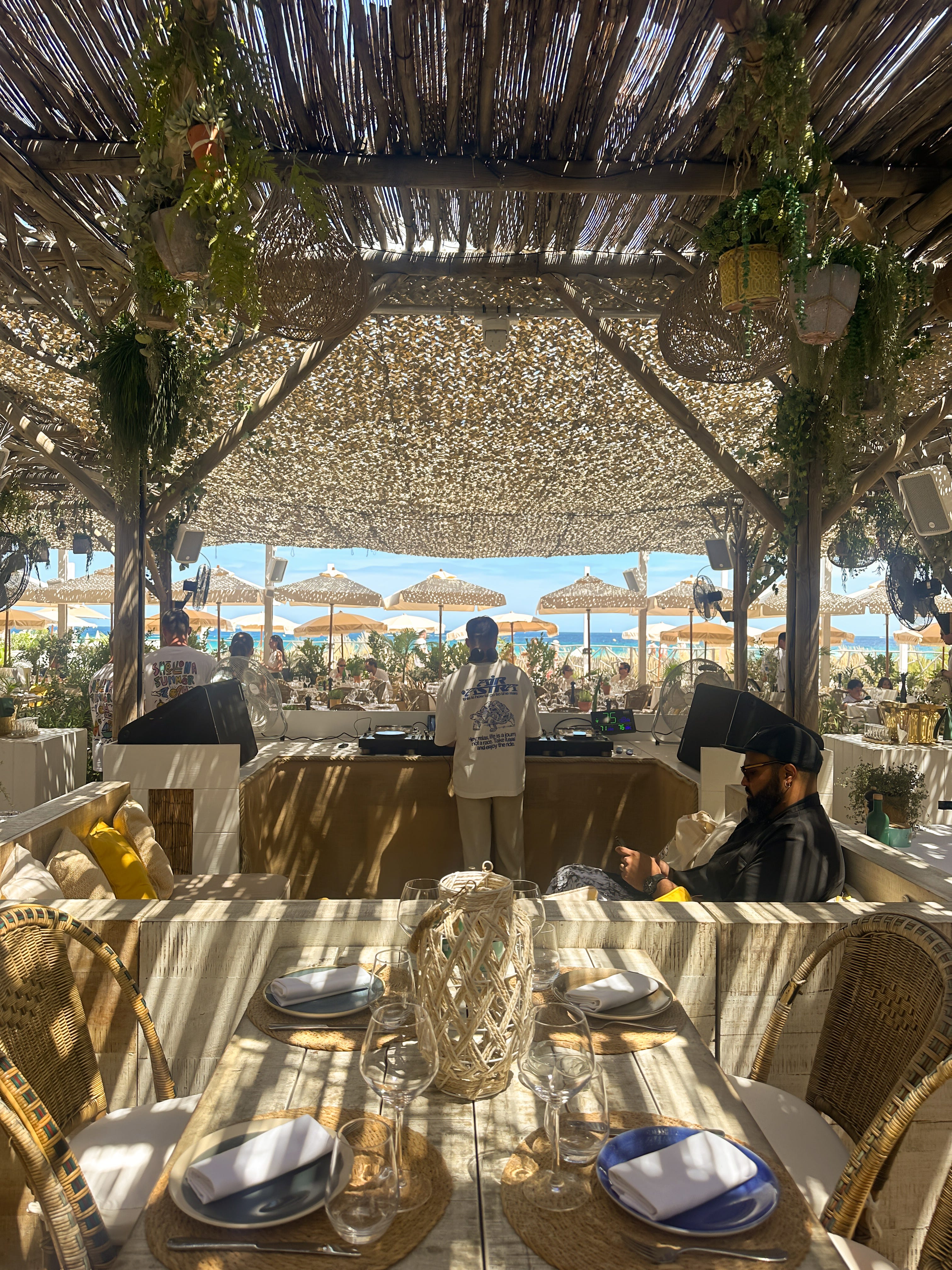
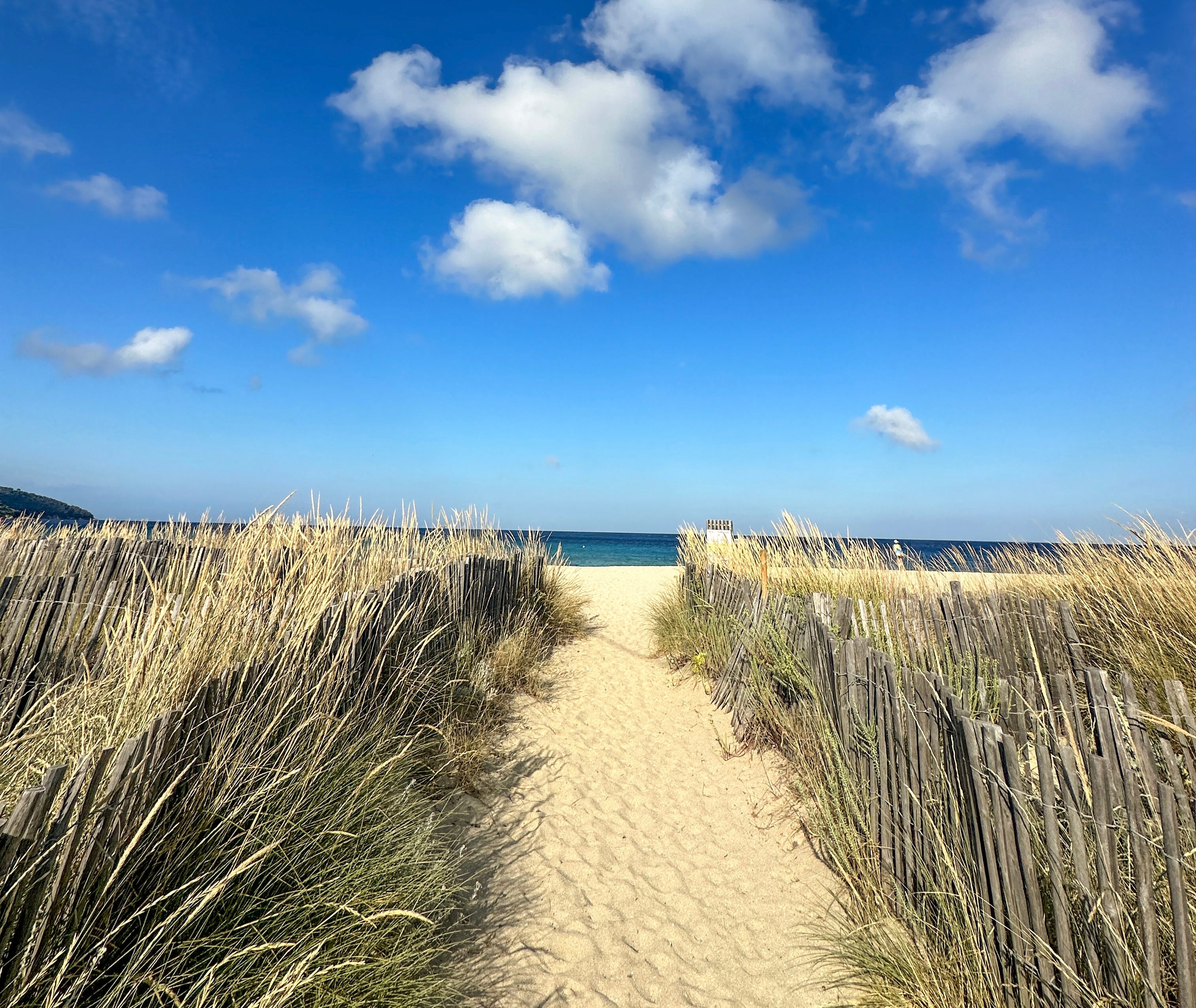
The beach clubs that made St. Tropez famous are not in the town at all. They line a stretch of beach miles from the marina, separated from a long boardwalk by tall grass that rustles in the sea breeze and gives the whole strip a slightly surreal, almost cinematic quality. You could walk the boardwalk and look into each one - Nikki Beach, Shellona, Bagatelle - like reading the chapters of a book about excess that somehow never becomes boring.
The rhythm is the same at all of them. Mornings are peaceful. The 3 to 3:30pm reservation is the one everyone wants. The DJ begins building from there and by 4pm the transformation is complete.
Shellona is for the crowd that wants to dance. EDM, energy, people genuinely having fun without caring too much about being seen having it. It is unpretentious in the way that only a beach club playing very loud music to very tan people can be unpretentious. This is my speed.
Bagatelle is the yacht crowd. The see and be seen place, where the music moves through enough genres to keep everyone moving and the signature moment is the white napkin wave - napkins raised above heads, people standing on chairs, bottles arriving with sparklers, the whole theatrical production of visible celebration that St. Tropez has made its own art form. It is genuinely fun and also genuinely a performance.
St. Tropez is extremely expensive and extremely worth seeing once. But the best beach club experience on the Côte d’Azur, I discovered later, was not in St. Tropez at all.
Domaine Mirabeau | The Movie Set in the Var
Ninety minutes from the coast, the South of France becomes something else entirely.
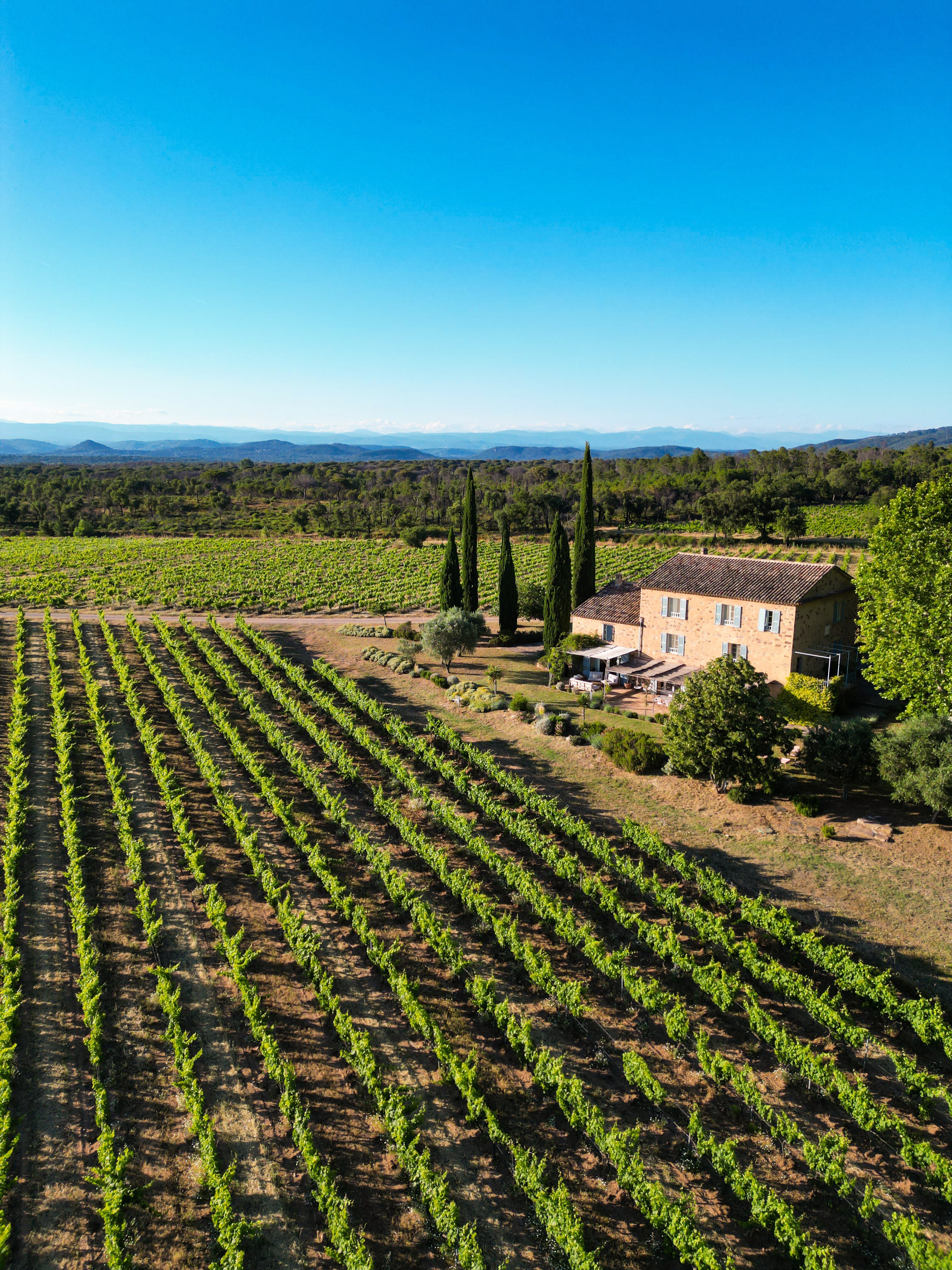
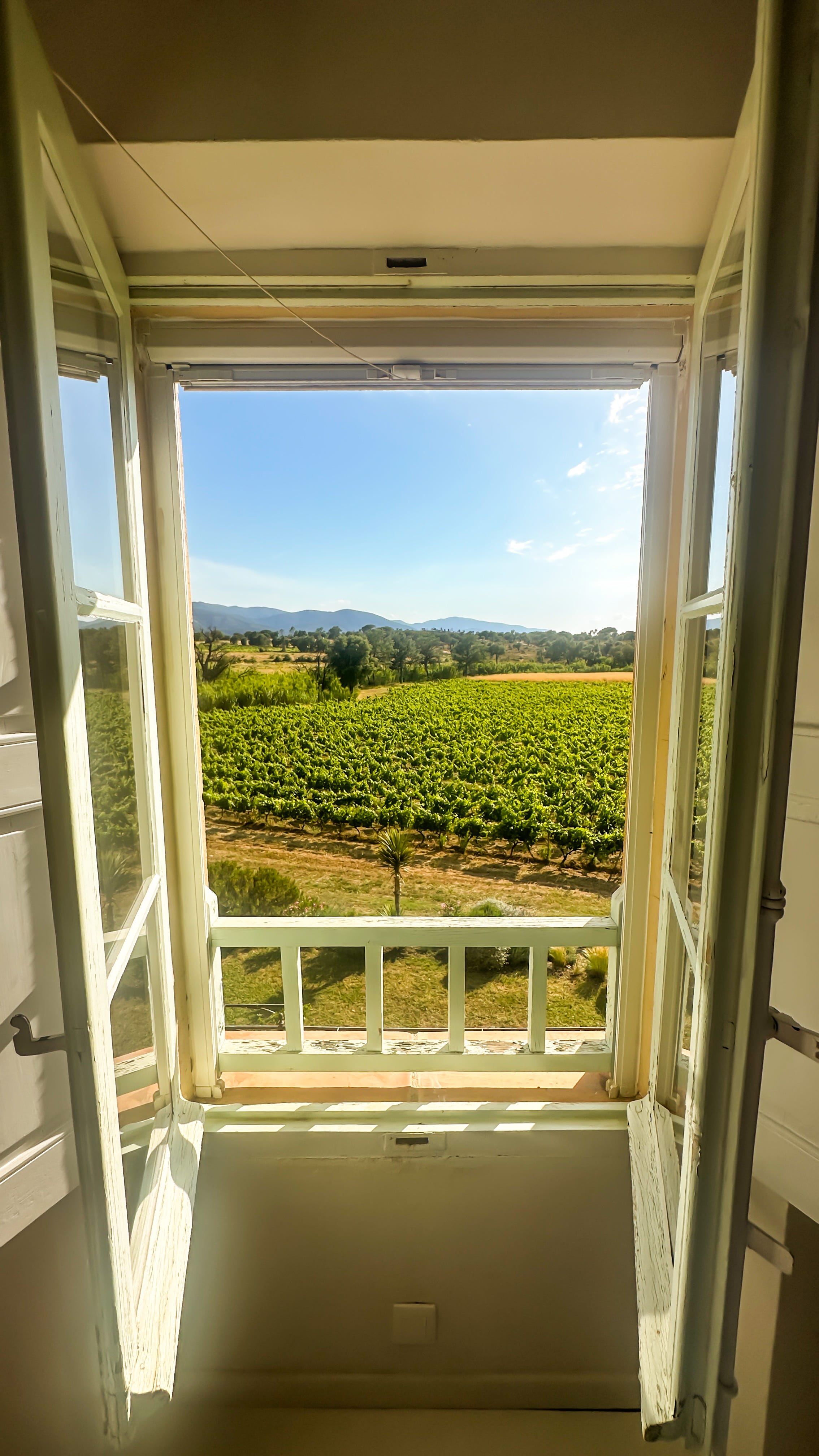
Arriving at Domaine Mirabeau after a week along the Riviera felt like stepping out of one film and into another. The property, a private vineyard estate in La Garde-Freinet in the Var, operates at the pace that Provence has always operated at, which is to say unhurriedly and without apology. There are goats on the property, and alpacas. There is a pool that looks exactly like the pool in A Good Year, the Russell Crowe film set in Provence, and sitting beside it with the vines stretching in every direction and the mountains visible beyond the cypress trees, you understand why someone would give up everything to stay.
The groundskeeper walked us through the vines and talked about the history of the land with the particular pride of someone who has been paying attention to the same piece of earth for a long time. Learning that history - the specific soil, the specific grapes, the specific decisions made over generations - changes the way the wine tastes at dinner.
And dinner. The terrace at dusk with a cheese board that seemed to grow rather than shrink, local wine in glasses that caught the last light, the sun dropping behind the vines in shades of gold and amber that have no accurate name. We sat there for hours. Nobody suggested moving. The air smelled of lavender and warm earth and the particular sweetness that vineyards have at the end of a summer day.
We spent an afternoon in Cotignac, a village nearby that felt genuinely undiscovered — locals at café tables under the plane trees, three hour lunches where nobody looked at their phone, no souvenir shops, no tour groups. A place where life is still organized around pleasure rather than productivity. I thought about it for days afterward.
Cannes and La Guerite | The Island at the Center of Everything
Hotel Martinez on the Croisette is fashion made physical. The building, the interiors, the people walking through the lobby - all of it dressed with the kind of effortlessness that takes enormous effort to achieve. Standing on my balcony with the gold wrought iron railing and the Mediterranean below and the energy of Cannes moving through the streets beneath me felt like arriving at the center of something. We walked to dinner at 10pm because nobody in Cannes eats before 10pm, through cobblestone alleys lined with bars and restaurants where the night had barely started.
La Guerite is on an island off the coast of Cannes, accessible only by boat, which means that even getting there requires a small act of intention. We arrived early and claimed beach loungers and watched the anchorage fill with tenders and dinghies ferrying guests from yachts anchored offshore - a steady procession of people for whom arriving by boat is simply the normal way to arrive somewhere.
The 3pm seating is the one that matters and by 4pm La Guerite is doing what it does better than anywhere else on this coast. Half the club that afternoon had been reserved for a 21st birthday party, the guest list arriving exclusively from yachts, 200 bottles of Cristal champagne pre-ordered, the kind of celebration that treats the extraordinary as completely ordinary. Watching it unfold with a glass of rosé felt like having a front row seat to a world that exists mostly out of sight.
What makes La Guerite better than Bagatelle (in my opinion), despite the similarities, is something harder to define. The island setting creates a sense of remove - you are not in Cannes exactly, you are offshore from it, which changes the energy in ways that are subtle but real. It feels less like a performance and more like a party that happens to be extremely well dressed. I could have stayed until the last boat left.
What the South of France Actually Is
The mistake most travelers make in the South of France is choosing a speed and staying in it. Either the beach clubs, the yacht scene and the 3am cobblestone alleys, or the lavender, the vineyards and the three hour village lunches.
The place only makes complete sense when you do both. The excess of La Guerite is more meaningful when you have spent three days at Domaine Mirabeau watching goats wander between vine rows. The quiet of Cotignac is more precious when you have stood on a chair at Bagatelle waving a white napkin while someone’s 21st birthday guests consumed 200 bottles of champagne nearby.
The South of France is not one place. It is a conversation between two versions of the good life - the loud one and the quiet one. And the best trip is the one that gives you enough of both to understand the difference.
Visited: June 2024. Route: Saint-Jean-Cap-Ferrat → Eze → Nice → St. Tropez → Domaine Mirabeau La Garde-Freinet → Cannes. Stayed at: Domaine Mirabeau, Hotel Martinez Cannes. Do not miss: Paloma Beach walk around the Cap Ferrat peninsula, Eze village before 9am, Le Plongeoir without a reservation, La Guerite by boat.